Blog
Signs of Problem Gambling: Red Flags, Causes, and Help
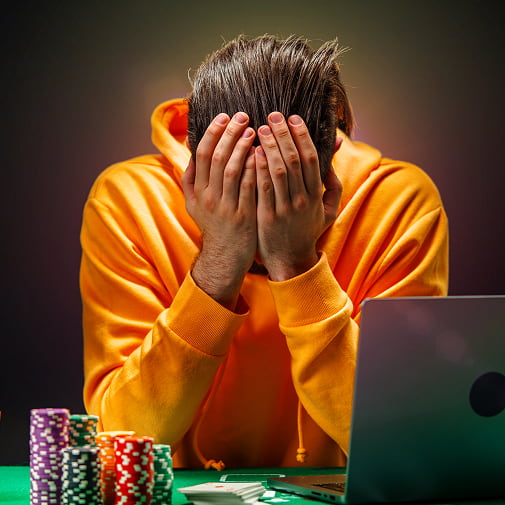
Signs of Problem Gambling & Resources Problem gambling rarely appears overnight. It usually develops gradually, which is why recognising the early warning signs is crucial. Spotting them early can prevent serious financial, emotional, and mental health consequences. Key Takeaways Problem gambling causes financial, emotional, and mental health harm. Warning signs include chasing losses, secrecy, and inability to stop gambling. Professional help, therapy, and support groups can help with recovery. Gambling is something millions of people do without it ever becoming a serious issue. For most, it stays where it belongs: a form of entertainment, a bit of excitement, something that happens occasionally and doesn't overspill into the rest of life. But for some people, it doesn't stay there. It grows. It takes up more space — financially, mentally, emotionally — until it is no longer a pastime but a problem. Understanding the difference and knowing what to do about it is something everyone who bets should be familiar with. That includes the casual bettor who thinks it could never happen to them. What is Problem Gambling? Problem gambling is a broad term for gambling behaviour that causes real harm. That harm can be financial, psychological, or social. It can damage relationships, drain savings, and affect mental health. It exists on a spectrum. At the mild end, someone might be betting slightly more than they can comfortably afford and struggling to stop. At the severe end sits gambling disorder, a recognised mental health condition (classified by the American Psychiatric Association, among others). You’ll also hear terms like gambling addiction, compulsive gambling, or pathological gambling. The labels overlap. What matters is the core signal: gambling is causing harm, and the person cannot stop despite wanting to. According to the World Health Organisation, around 1.2% of the global population meets the criteria for gambling disorder. In the UK, roughly 0.5% of adults are classified as problem gamblers, with another 3.8% at moderate risk. Those percentages translate into millions of real people (and their families) dealing with the consequences. Psychological Causes and Risk Factors Why does gambling become a problem for some people and not others? The honest answer is that there is no single cause. Gambling addiction typically emerges from a combination of biological, psychological, and environmental factors. The worst thing is that not all of them are within a person's control. The Brain and Dopamine Gambling activates the brain's reward system in a way that closely resembles the effect of drugs and alcohol. Each bet (regardless of the outcome) triggers a release of dopamine, the brain chemical associated with pleasure and anticipation. Over time, the brain adapts. It requires more stimulation to produce the same response. The gambler needs to bet more, or at higher stakes, to feel the same level of excitement. This is tolerance, and it's the same mechanism that underlies substance addiction. Mental Health Conditions There is a strong and well-documented link between problem gambling and other mental health problems. Depression, anxiety, bipolar disorder, ADHD, and substance use disorders all appear at significantly elevated rates in people with gambling disorder. The relationship tends to run in both directions: existing mental health difficulties increase the risk of developing a gambling problem, and gambling problems can cause or worsen mental health difficulties. For some people, gambling begins as a form of self-medication. It's a sort of way to escape low mood, stress, or emotional pain. Unfortunately, in many cases, it becomes a problem in its own right. Key Risk Factors Certain factors are consistently associated with a higher likelihood of developing a gambling problem. These include: Age. Gambling disorder is more common in younger and middle-aged people. Exposure to gambling during adolescence substantially increases lifetime risk. Sex. Men are more likely to develop a gambling disorder and tend to start gambling earlier. Women who develop gambling problems often progress more quickly from recreational gambling to dependency. Family history. Having a family member with a gambling problem significantly increases individual risk through a combination of genetic predisposition and environmental exposure. Personality traits. High impulsivity, competitiveness, a need for excitement, and a tendency toward addictive behaviour are all associated with increased vulnerability. Availability. The rise of online gambling (accessible 247 via smartphone) has materially increased risk for people who might previously have been protected by the friction of having to travel to a casino or betting shop. Other addictions. Alcohol and drug use are both risk factors and frequent co-occurring conditions. Each can worsen the other. Gambling Problem Signs: 10 Behavioural Signs to Watch Out For The signs of a gambling problem are not always obvious, particularly in the early stages. Many people experiencing a gambling disorder are skilled at concealing it. These are the most common warning signs to look out for (either in yourself or someone close to you): 1. Compulsive gambling Constantly thinking about the next bet, reliving recent wins or losses, planning future gambling activity, or calculating how to get more money for gambling. Gambling begins to occupy mental space that once belonged to other things. 2. Impulsive gambling It is the fastest way to move from making money to losing money territory. It’s emotional, reactive, and usually triggered by frustration or overconfidence. Doubling stakes, betting without edge, and similar — that’s not strategy, that’s tilt. Long-term profit demands discipline, not dopamine-driven decisions. 3. Chasing losses This is one of the most telling signs of problem gambling. Rather than accepting a loss and walking away, the person continues gambling in an attempt to win back what they've lost. The logic — I'll stop once I'm level — is compelling and almost always leads to deeper losses. Chasing is the mechanism by which a bad day becomes a catastrophe. 4. Inability to stop Repeatedly trying to cut back or stop gambling and finding it impossible to do so. Setting limits and breaking them. Promising oneself (or others) that this will be the last bet, and then placing another. 5. Gambling with increasing amounts Needing to bet more money, or at higher stakes, to get the same feeling of excitement. This is tolerance, and it's a clear sign that gambling has moved from recreation into dependency. 6. Gambling to escape Using gambling as a way to cope with stress, anxiety, depression, boredom, or relationship problems. The gambling itself may provide temporary relief, but the underlying problems remain — and new financial problems compound them. 7. Lying and concealment Hiding the extent of gambling from family members, partners, friends, or colleagues. Lying about where money has gone or fabricating reasons for financial difficulties. 8. Borrowing money Asking family members or friends for money, taking out loans, maxing out credit cards, or accessing savings to fund gambling or pay off gambling debts. Sometimes the borrowing is not disclosed as being gambling-related. 9. Jeopardising important relationships or opportunities Gambling interferes with work, study, or significant relationships. Missing commitments. Losing a job or educational opportunity as a result of gambling-related behaviour. 10. Restlessness or irritability when not gambling Many problem gamblers report experiencing withdrawal-like symptoms when unable to gamble or when attempting to stop. What we're talking about are things like agitation, anxiety, difficulty concentrating, and mood swings. Gambling Disorder Signs in Friends and Family Members If you're concerned about a family member or someone close to you, it can be difficult to know what to look for. Unexplained financial problems, unusual secrecy around money, frequent absences, withdrawn or irritable behaviour, and a general deterioration in mood and relationships can all be indicators. It's worth approaching the conversation with care rather than accusation. Denial is almost universal in the early stages, and a confrontational approach often makes it harder for the person to acknowledge the problem. The Impact of Problem Gambling Gambling disorder is not simply a financial problem, though the financial consequences can be severe and long-lasting. The harm spreads to virtually every area of a person's life and affects the people around them. Financial Trouble The most visible impact is often financial. Savings depleted. Debts accumulated — sometimes to banks, sometimes to family members, sometimes to sources that cause further problems. Loss of a home. Bankruptcy. The financial damage can take years to repair, even after gambling has stopped, and the stress of that damage can itself become a trigger for relapse. Mental Health Issues The relationship between gambling disorder and mental health is bidirectional. People with mental health issues often look for solutions in gambling. Likewise, those with a gambling disorder almost always end up with some sort of mental health issue. Depression and anxiety are extremely common in people with gambling problems. Relationships Family members, partners, and close friends often bear a significant share of the burden of a loved one's gambling problem. It can be through financial strain, broken trust, emotional volatility, and the exhaustion of trying to manage someone else's crisis. Relationships frequently fracture. Gambling affects children as well becasue households affected by problem gambling are exposed to financial instability and emotional distress that can have lasting effects. Work and Career Lost productivity, absenteeism, and deteriorating performance are all common consequences. In severe cases, people resort to theft or fraud to fund gambling, with obvious and lasting career and legal consequences. Professional Treatments for Gambling Addiction The first thing to understand about gambling addiction treatment is that it works. Many people with gambling disorder recover — not always in a straight line, and not always on the first attempt, but substantially and lastingly. Only around one in ten people with a gambling disorder currently seek treatment. That gap between need and uptake is one of the most significant problems in this area. Talking to a Mental Health Professional For most people, the starting point is speaking with a mental health professional — a GP, psychologist, addiction counsellor, or specialist gambling therapist. A proper assessment helps determine how severe the problem is and whether other conditions, such as depression or anxiety, are involved. That second part matters. Gambling problems rarely exist in isolation. Treating the gambling while ignoring underlying mental health issues significantly lowers the chances of long-term recovery. Cognitive Behavioural Therapy (CBT) CBT is the most well-evidenced psychological treatment for gambling disorder. It works by helping the person identify and challenge the distorted thought patterns that maintain gambling behaviour. The belief, for example, that a losing streak must eventually be followed by a win, or that skill can influence the outcome of random events. CBT also develops practical strategies for managing triggers, cravings, and high-risk situations. Motivational Interviewing Often used alongside CBT, motivational interviewing is a collaborative approach that helps people explore and strengthen their own motivation to change. It's particularly useful in the early stages, when ambivalence about stopping gambling is high. Medication There is no specific licensed medication for gambling disorder, but certain medications used for other conditions have shown promise in research settings. Medication is typically used alongside psychological therapy rather than as a standalone treatment. Gamblers Anonymous and Peer Support Gamblers Anonymous operates a 12-step programme modelled on Alcoholics Anonymous, with meetings available worldwide. For many people, the combination of peer accountability and the experience of others who have been through the same thing is a crucial element of recovery. GamAnon provides equivalent support for family members and close friends affected by someone else's gambling. Self-Exclusion and Practical Tools Most betting sites and online casinos offer their own self-exclusion options. At Gamdom, for example, you can find several responsible gambling tools, including limits and account controls. These tools don’t treat the underlying problem, but they remove access to gambling opportunities. In the early stages of stopping gambling, that barrier can make a critical difference. Resources If you or someone you know needs help with a gambling problem, the following resources are free, confidential, and available now. National Gambling Helpline (UK) Run by GamCare, this is a free and confidential service, available 24 hours a day, 365 days a year. 📞 0808 8020 133 💬 Live chat: gamcare.org.uk GambleAware Information, advice, and access to the National Gambling Support Network. 🌐 gambleaware.org Gamblers Anonymous UK — Peer support and 12-step recovery meetings. 🌐 gamblersanonymous.org.uk GamAnon UK & Ireland — Support for families and friends affected by someone else's gambling. 🌐 gamanon.org.uk GamStop — Free national online self-exclusion scheme for all UK-licensed gambling sites. 🌐 gamstop.co.uk NHS — Help for Problem Gambling — Information and referral routes through the NHS. 🌐 nhs.uk/live-well/addiction-support/gambling-addiction Samaritans — if you are in crisis or experiencing suicidal thoughts 📞 116 123 (free, 24/7) How to Stop Gambling: Starting the Conversation If you recognise signs of a gambling problem in yourself, the most important step is the hardest one: telling someone. Whether that's a trusted friend or family member, a GP, or a helpline adviser, breaking the secrecy is the point at which recovery becomes possible. Many people describe relief as the dominant emotion when they finally talk about it. If you're worried about someone else, approach the conversation with empathy rather than accusation. Gambling disorder is a mental health condition, not a moral failing. The person may not yet be ready to acknowledge the problem, and that's a reality you may have to sit with. But planting the seed and making clear that support is available without judgment matters a lot. Gamble at Gamdom Responsibly!