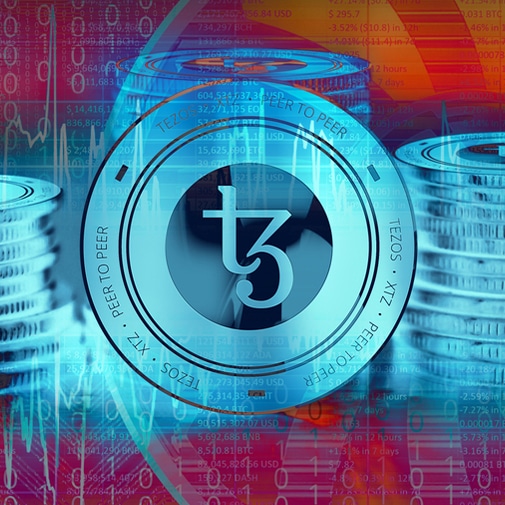
What is Tezos (XTZ) and how does it work?
Tezos is one of the first proof-of-stake blockchains for making smart contracts and DeFi participation. Discover the details in this general guide.
Exploring Tezos (XTZ): Overview and key features
Tezos (Tez or XTZ) launched in 2018 and was frequently seen as a more sustainable alternative to Ethereum (ETH). However, its conceptualisation started in 2014, a year before the latter’s mainnet went live. This means Tezos uses ideas not popularised by Ethereum; many of these remain groundbreaking innovations today.
Key Takeaways
- Tezos is a layer-1 blockchain that lays the foundation for DeFi applications and smart contracts, creating a platform for various Web3.0 projects rivalling Ethereum.
- Tezos’ biggest feature is its ability to update itself without disrupting users’ activities.
- Governance in Tezos is run by bakers and other users can back them as dellegators.
To briefly answer ‘what is Tezos?’, it is a layer-1 blockchain platform designed to support layer-2 projects for the decentralised economy. With its ability to grow perpetually and adapt its systems, Tezos aims to increase scalability, security, and energy efficiency.
Tezos network key features
You can expect to include all essential layer-1 features from Tezos such as a consensus system, network structure, and platforms for layer-2 projects. What makes each blockchain different is its choice of tools to fulfil these functions. Here are the key features of the Tezos blockchain, defining its strengths in the decentralised finance (DeFi) ecosystem:
Baker-driven governance
The most unique element about Tezos that no other blockchain can rival is its adaptive governance model. XTZ crypto holders can vote on how they want the platform to grow. It can be about improving scalability, reducing transaction fees, or introducing a new token standard to boost capitalisation.
Voting power is given to bakers which are daemons in Tezos nodes working together to decide the platform’s future. They are also in charge of validating transactions and are compensated by the protocol. Therefore, its leaders are everyone within the community of developers, investors, and other experts on the blockchain.
Tezos holders can also be delegators, which means they entrust their voting rights to a baker, giving them more voice in the next voting period. Users who do this are identified as ‘delegators’ and it’s a great opportunity for investors to shape Tezos’ growth trajectory.
Place crypto bets on exciting esports events at Gamdom
Modular and upgradable for all functions
All changes bakers decide for Tezos are applied through a multi-period process. Users don’t need to prepare for them like stopping transactions for an hour or a day. There’s also no need to migrate assets to another network like ETH traders had to after the Ethereum Merge. Drastic changes will happen but everyone can continue using Tezos as they happen.
This is a big advantage to Tezos users because such updates in other networks are disruptive in financing. Eliminating the need to fork which also removes disruptions for users. All transactions and smart contracts may continue as they were even during the new update.
Liquid proof-of-stake validation system
Tezos was one of the first blockchains to use proof-of-stake (PoS) where validators lock their assets on a node to support the network. It was more energy efficient than the proof-of-work (PoW) that Bitcoin (BTC) popularised. Thus, it was one of the inspirations for Ethereum 2.0 where they replaced PoW with the PoS system, dropping ETH's carbon footprint by 99.95%.
The blockchain, Tezos, uses a unique version of PoS called liquid-proof-of-stake (LPoS). No fixed number of block producers and bakers can run nodes using low-performance hardware. Delegators can always change bakers, giving the community of users flexibility in how they want their participation handled in Tezos.
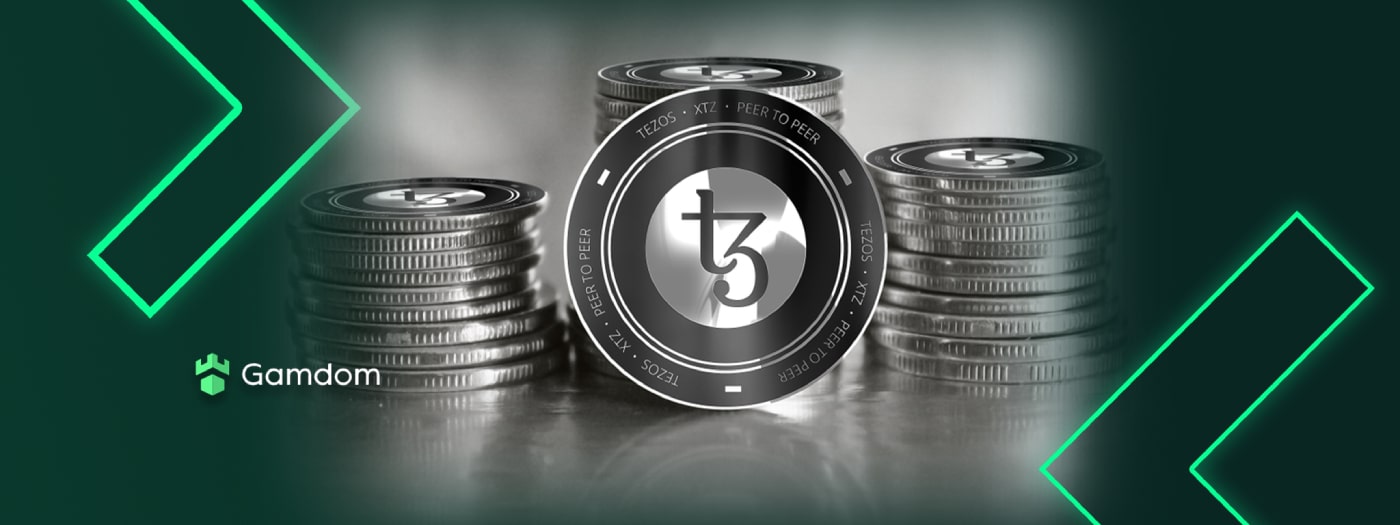
Tezos core functions
As a layer-1 network, Tezos has many capabilities, given its years of constant improvement. However, it keeps its main functions which are the foundation of what the Tezos Platform is known for. Here’s an overview of these key functions and their role within the network:
Baking rewards
While PoW networks like Bitcoin mine their block, validators in Tezos bake them. That means ‘baker’ refers to the validators and ‘baking’ is the creation of new blocks expanding the blockchain. Just like its contemporaries, bakers are rewarded for their work. The Tez created from the new block as well as part of the fee paid to validate a transaction are the payment.
Becoming a baker requires at least 6,001 XTZ as 6,000 XTZ is the minimum amount needed for baking and 1 XTZ covers the self-delegation fee. You also need a hardware crypto wallet and a computer/mobile device with an app that can interact with that cold storage. Connect them to your baking device (mining rig) and you’re all set.
Tools to make smart contracts
Tezos was designed to be a platform for smart contracts which are the building blocks for decentralised apps (DApps). You can give it a set of strict instructions that will perform specific actions when conditions to trigger them are met. What that action is and what the conditions are is up to the creator of the smart contract to decide.
The immutability of smart contracts ensures that the crypto stored within them remains protected until executed by the owner. The domain-specific language used for this feature is the Michelson which can be written using Python library in SmartPy. It’s one of the most user-friendly means to write codes in smart contracts compared to Ethereum.
Check out exciting sports events to bet on here
Upgrades without the need for a fork
All blockchains are upgradeable but most rely on forking, which means creating a parallel chain where the new changes are applied rather than putting them on the same network. That is different for Tezos because the network grows perpetually over time. All changes decided by voting are made on the same network, creating a seamless but adaptable layer-1 platform.
It applies to all changes for improving the networks’ scalability, processing speed, or supporting specific applications. This way, it can always adapt to the ever-changing landscape of the crypto economy and provide what its users need.
A platform for varieties of tokenisation including NFT
Tezos has two Financial Applications (FA) where FA1.2 is the token standard for fungible assets and FA2 is for a wider range of token types. FA1.2 covers assets that can be traded like money or held as a store of value including wrapped Bitcoin (tzBTC).
FA2 includes all layer-2 tokens including fungible, non-fungible, non-transferable, and multi-asset contracts. Their main equivalents on Ethereum are ERC-20, ERC-721, ERC-1238, and ERC-1155 respectively. The difference is that Tezos classify all of them under FA2 for versatility.
It is through FA2 that Tezos is also capable of hosting metaverse spaces on its platform. The Tezos Gaming Portal has a commitment to gaming and esports industries in partnership with Ubisoft, EVE Online, and various emerging projects on the network like Dogami. You can find their tradable assets on marketplaces such as Fxhash, Objkt.com, and Hic et Nunc among others.
Voting operates code changes in Tezos
The quintessential answer to the question ‘How does Tezos work?’ revolves around its updates because that is its biggest advantage over other layer-1 networks. It’s a multi-period process and bakers vote in each stage. This way, the whole community can also review potential effects. Here’s the step-by-step process for how changes were made.
- Proposal → This is the period where one or more bakers propose a change to the Tezos blockchain. The community of bakers vote on which one of the many submissions to grant and move to the next period.
- Exploration vote → The proposal is further studied by all bakers. It only passes and moves to the next stage once it has reached 80% of the community’s vote.
- Testing → A fork of Tezos is created where the proposal is tested for 48 hours. Developers assess if it’s going to be safe and functional for the mainnet before it is fully adopted. If the quality is satisfactory, then the proposal moves to the next period.
- Promotion vote → Bakers take another round of voting on whether or not the proposal will be implemented. A majority vote of 80% is the minimum requirement for a vote to go through. If it succeeds, then Tezos will be officially improved.
Tezos offers great investment opportunities
Crypto investors value both innovation and stability in a layer-1 network serving as a foundation for many DeFi projects. Tezos satisfy all that you would want in a blockchain because of its robust features. Unfortunately, Tez or XTZ is not one of the fastest-growing crypto like Bitcoin or Ethereum because these are more popular than Tezos as a blockchain.
Despite this, XTZ remains a liquid asset because of its regular trading volume reaching $11 million per day. However, adoption for anything outside of dapps development is difficult for a network with only $764 million in market capitalization as of 2024. You won’t see it used as a mode of payment or Gamdom payment method anytime soon. If you wish to add XTZ to your portfolio, the best reason is if you are investing in DeFi projects.