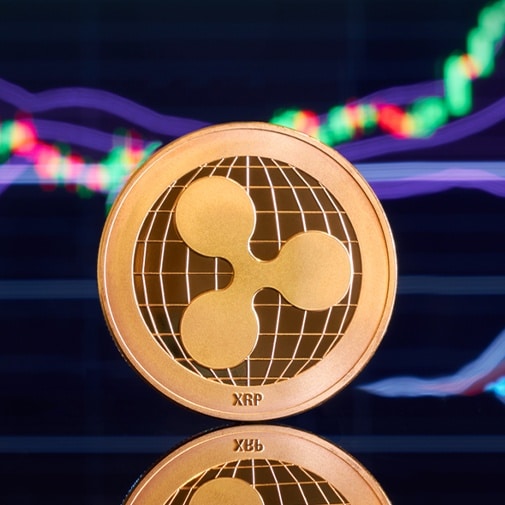
Ripple (XRP): Is it a smart investment?
Investors reevaluate Ripple (XRP) amidst the 2024 crypto boom. Weigh its advantages as an investment for prospects with Gamdom.
Everything about Ripple (XRP) and its advantages for investors
Ripple (XRP) was one of the top crypto investments when crypto blew up in the 2020s. It’s largely overshadowed by other networks like Bitcoin (BTC) and Ethereum (ETH) but it persists as a pillar of decentralised finance. XRP is getting reevaluated for investors in 2025 and beyond following developments in crypto regulations.
Key Takeaways
- Ripple is the network while XRP is the token that circulates it.
- Ripple XRP is designed to be a settlement layer in institutional trading, unlike contemporary digital assets which were popular for spot trading.
- It’s better to look at Ripple’s adoption than its market price to assess its value as an investment.
How does XRP work?
The best way to answer the question ‘What is Ripple cryptocurrency?’, should be to clarify that Ripple and the XRP native token are often defined separately. Ripple refers to the payment network and protocol that uses the XRP Ledger (XRPL) blockchain. The XRP cryptocurrency is the money circulating to carry transactions or provide liquidity services to its users.
The common system in cryptocurrency is that validators prove the network’s processing power and are compensated for transactions they validate and block mined. Ripple works differently because all its assets are pre-mined, with the max supply set at 100,000,000,0000 XRP. Instead of mining rewards, validators are compensated through transaction fees.
The vision for creating Ripple
Ripple XRP is primarily designed to offer the advantages of blockchain technology to banks and corporations. That means giving them the power to make cross-border remittances, trading, and money transfers rather than rely on traditional banking. Unlike most crypto that aims to replace fiat, XRP focuses on replacing the settlement layer in institutional finance.
As a result, individual traders are less interested in XRP as an investment. It was never intended for spot trading so that’s not an issue for Ripple. Instead, Ripple Labs’ roadmap is committed to global expansion for Ripple XRP crypto adoption. It will increase the utility of the token and with it, the supply-demand which will be beneficial to traders.

How to own and use XRP
You will need an XRP Toolkit, a platform for managing crypto on the XRPL like sending and receiving funds. It also lets you establish Trust Lines which lets you hold assets on the network. Besides this extra layer, XRP can be used and held the same way as other top crypto.
XRP can be purchased from exchanges like Binance or brokers like eToro as well as stored in wallets like the Ledger Live or Ledger hardware wallet. Gamdom accepts XRP for depositing, claiming bonuses, and betting. It’s also available for purchase using the ‘buy crypto’ deposit method.
For individuals, the XRP you have on hand can be used as a mode of payment and store of value, like other crypto. It’s only a matter of finding establishments that will accept it in a transaction. Institutions have more applications for XRP like its intended use as the exchange medium to bypass border restrictions and the need for conversion.
Bet double or nothing on HiLo using crypto
Is Ripple worth investing in?
Speculations were made for XRP up to 2030 but the findings are mixed. Some say it will drop as low as $0.15 while others claim that it will rise to approximately $3.50. It’s hard to say how trends will affect Ripple investment but there is potential for growth in terms of application.
Following the court ruling on 13th July by Judge Analisa Torres of the United States District Court for the Southern District of New York, XRP is not deemed a security. It is a crucial distinction in Ripple Labs’ defence against the complaint from the Securities and Exchange Commission (SEC).
The ruling provides significant implications for XRP as a digital asset and the United States’ push for its regulations. It opens the door for creating a clearer regulatory framework that will protect US citizens as traders and investors in the blockchain economy. XRP, among other assets, is at the centre of attention and will likely be more valuable in the future.
How XRP gets its value as an asset
XRP is affected by supply and demand as with any asset, making it reliant on scalability and adoption. That works great because the Ripple blockchain is one of the most scalable networks in the crypto industry. Lots of newcomers can easily join its ecosystem because the native token is so easy to buy and trade.
Institutions are the primary target and they have huge spending power. If Ripple Labs’ can achieve its roadmap goals, then XRP’s value will rise as it becomes more liquid.
Advantages of using XRP
Ripple users enjoy the same advantages that all decentralised networks offer, including freedom from traditional banks’ limitations like delays and errors, and geographical restrictions. To be more specific, here are all the advantages businesses can get from using Ripple XRP:
- Cross-border remittance: The biggest challenge for businesses is working with entities from abroad. Entities from different countries have to convert their cash to the recipient’s native money which will cost fees in remittance services.
If their banks can’t convert each other’s cash directly, then they have to convert it into a mutually supported fiat like the United States dollar (USD). Ripple replaces that by allowing one money’s value to travel between borders in XRP. One entity can buy XRP and send it to the recipient who will convert it into their native currency.
- Low-cost transaction: Conversions from one fiat to another already come with a large fee and stipulations depend on the exchange. As stated, it is possible that you cannot convert one currency to the other because their central banks do not support the exchange.
This forces you to convert to a third fiat, then into the recipient’s native money, both of which cost extra fees. Converting the money to and from XRP is much cheaper and direct. That means no one will suffer from the exorbitant fees that traditional banking charges.
- Quick transactions: The XRPL technology has a scalable infrastructure designed to handle 3,400 transactions per second (tps). For context, Ripple’s rival in providing international payment solutions for institutions is SWIFT which can only run 523.14 tps. Meanwhile, credit cards can handle 1,602 tps. XRPL outpaces both alternatives.
Is Ripple a good investment in the near future?
Ripple has its advantages and serves as a valuable utility token. However, deciding if it’s a good investment differs from other assets. The best way to assess its value is to keep track of Ripple’s adoption rather than price speculations. This makes XRP less volatile in black swan events compared to its contemporaries.
XRP is overshadowed by BTC and ETH in the spot trading section of the digital asset economy where more volatile assets often attract attention. The most trending crypto topic in 2024 is Web3 and related projects which are currently not dependent on Ripple. It’s a largely smart-chain-reliant ecosystem that seeks to usher in a new internet powered by blockchain technologies.
That’s not to say that XRP is out of place in this trend. Investors are coming from around the world trading assets and funding projects left and right. While the world is still run by fiat, Ripple has the potential to be the go-to payment solution for all financial institutions. Ripple Labs just needs to make sure to tap into that market and meet its demands.